

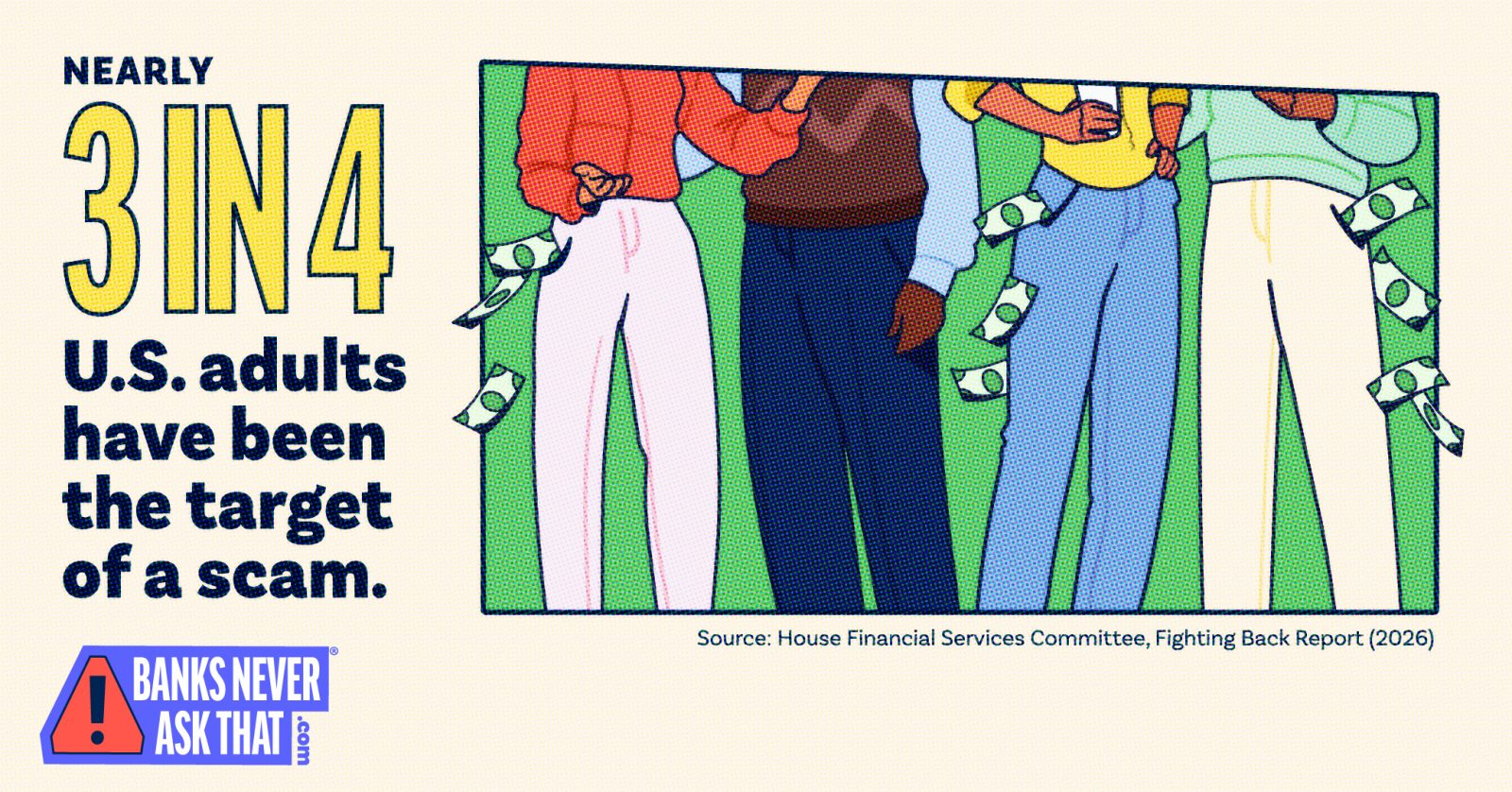
Did you know reports in 2026 show that nearly 3 in 4 adults in the U.S. have been targeted by a scam? That's your neighbor, your coworker, your family member, or even you. Scam attempts have become a part of everyday life, with fraudsters using increasingly sophisticated tactics to impersonate trusted organizations, create panic, and convince people to share personal information or move their money.
The good news? Knowing what to look for is one of the best defenses against fraud.
Whether it's a suspicious phone call, a text message claiming your account has been compromised, or someone pressuring you to act immediately, recognizing the warning signs can help protect your finances and your peace of mind.
At Bay State Bank, protecting our customers is a top priority. Understanding the warning signs of common scams can help you avoid becoming a victim.
🚩 1. Pressure to Act Immediately
Scammers often create a sense of urgency by claiming:
If someone pressures you to make a quick financial decision, pause and verify the situation before taking action.
🚩 2. Requests for Large Cash Withdrawals
These are common tactics fraudsters use to prevent victims from seeking advice.
🚩 3. Bitcoin ATM and Cryptocurrency Scams
One of the fastest-growing scams involves criminals directing victims to:
Bay State Bank will never ask you to withdraw cash and deposit it into a Bitcoin ATM to resolve fraud issues or secure your account.
🚩 4. Suspicious Calls and Text Messages
Fraudsters may contact you by phone or text while pretending to represent a trusted organization.
Remember:
Never provide personal or financial information unless you initiate contact using a verified phone number.
If you receive a suspicious call or text:
✅ Do not click links
✅ Do not share personal information
✅ Hang up and contact the organization directly using a trusted phone number
✅ Report suspicious activity to your bank
What to Do If Something Doesn't Feel Right
Fraud prevention is a shared responsibility, and you don't have to navigate suspicious situations alone. If you're unsure whether a call, text message, email, or financial request is legitimate, contact us before taking action.
If you suspect fraud or have questions about a suspicious communication, call Bay State Bank at (800) 244-8161. Our team is ready to help you verify requests and protect your accounts.
Remember:
Questions or concerns? Call Bay State Bank at (800) 244-8161.